Understanding Emotions as Signals for Growth
Understanding Emotions as Signals for Growth
Emotions are a vital part of being human. They can be powerful, sometimes overwhelming, but more often than not, they hold significant meaning. Understanding emotions as data can greatly benefit our mental and emotional well-being.
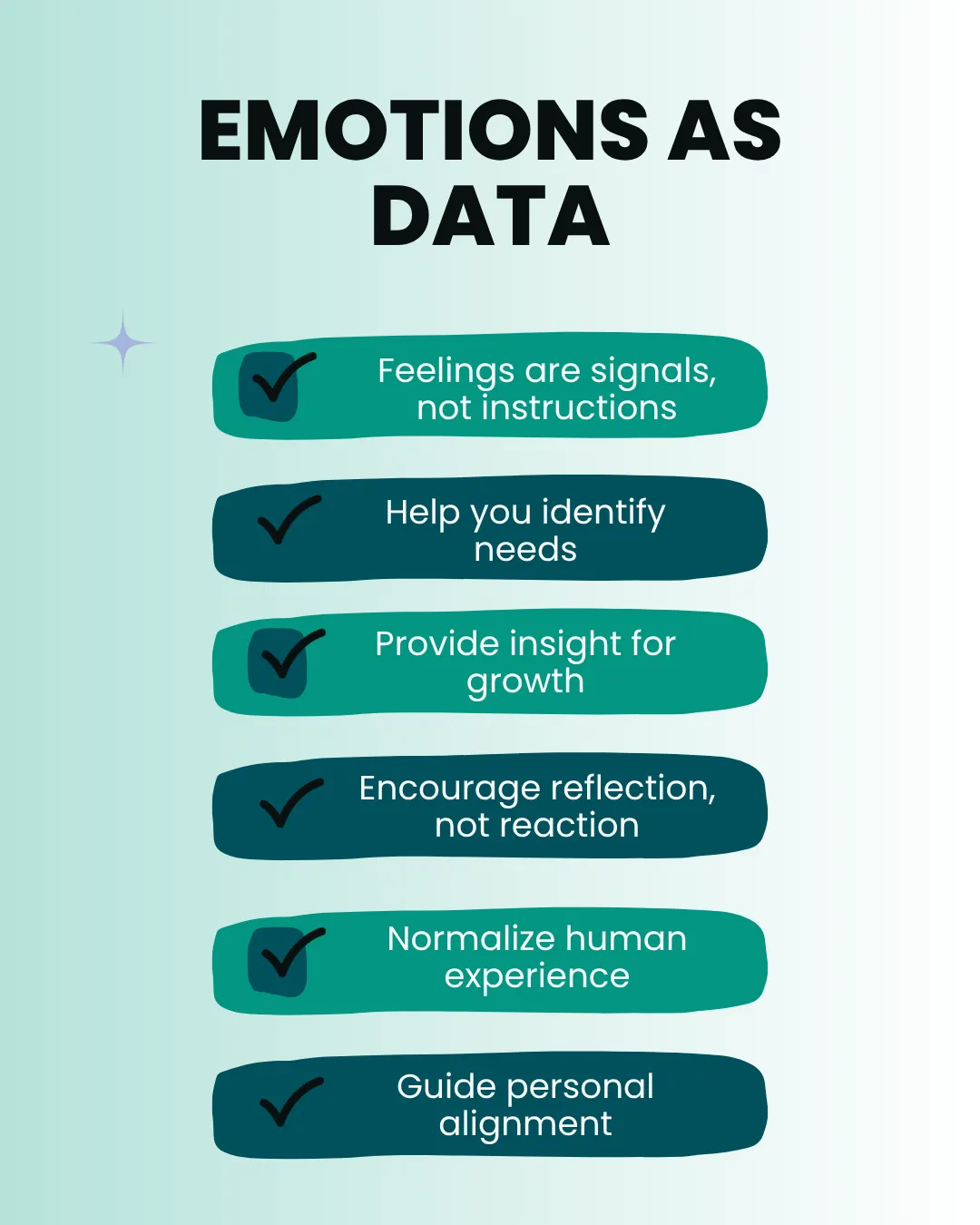
1. Feelings Are Signals, Not Instructions
Emotions are signals. They alert us to what’s happening in our inner worlds. Acknowledging that feelings are signals, not instructions, is a key concept in emotional intelligence. Rather than acting impulsively on emotions, we should pause and consider what they might be trying to tell us. For example, feeling anxious might simply signal that something important requires our attention. By recognizing this, we can assess the situation objectively and plan our responses thoughtfully.
2. Help You Identify Needs
Feelings can help us understand what we need. If you feel tired, your body might be telling you that you need rest. Sadness might suggest that you need comfort or connection. Recognizing these signals helps us take better care of ourselves. Reflecting on our emotions lets us identify unmet needs in our lives, guiding us towards healthier decisions that favor our overall well-being.
3. Provide Insight for Growth
Emotions can provide valuable insights into our growth and development. By examining our emotions, we learn more about ourselves, facilitating personal growth. For example, if you often feel frustrated, it might point to areas in your life or beliefs that require change. By investigating these feelings, you can gain insights that lead to personal development and self-improvement.
4. Encourage Reflection, Not Reaction
Reacting impulsively to emotions often leads to regret. Instead of immediate reactions, emotions encourage us to reflect. For instance, anger might trigger a desire to clash with others, but reflecting on this emotion could lead to finding constructive solutions. Reflecting on emotions allows us to understand their root causes, leading to more peaceful and satisfying outcomes.
5. Normalize Human Experience
Feeling emotions is a natural part of the human experience. Emotions remind us that we are alive and connected to the world around us. Normalizing emotions means accepting them rather than stigmatizing or trying to eliminate them. By embracing emotions as normal, we can engage with them more openly, reducing the negative impact on our mental health.
6. Guide Personal Alignment
Understanding emotions helps guide personal alignment. When we pay attention to our emotions, we recognize whether our actions and beliefs align with our true selves. For instance, persistent unease in a situation might indicate that it's time to adjust our path. By noticing these signals, we can make changes that reflect our authentic desires and values.
Conclusion
Viewing emotions as data helps us understand ourselves and the world around us better. Taking time to interpret these signals leads to personal growth, healthier relationships, and increased well-being. By acknowledging the valuable insights our emotions provide, we can use them as tools for navigating life's challenges, ultimately fostering a fulfilling and meaningful life.