Understanding Stress vs. Suffering
Understanding Stress vs. Suffering
In today's fast-paced world, stress is a common experience for everyone. It's an inevitable part of life, affecting people of all ages. But did you know that suffering from stress is optional? This idea may seem surprising at first, but by the end of this blog post, you'll discover how reframing stress can entirely change your experience. This change not only helps in building mental toughness but also supports emotional health and problem-solving abilities.
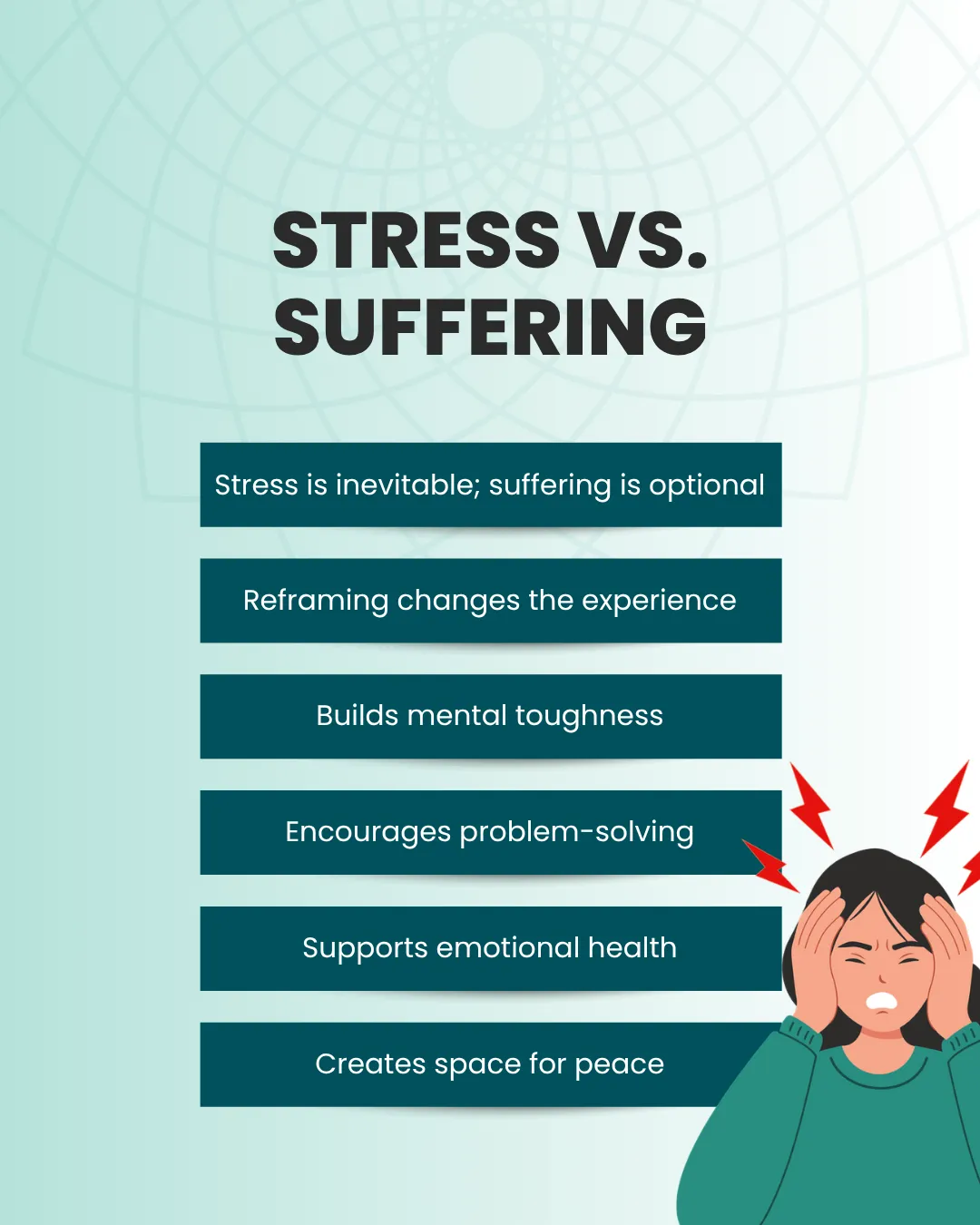
Stress is Inevitable; Suffering is Optional
Stress can come from school, work, or family challenges. It's a natural response that helps us deal with difficult situations. Imagine it as a signal that alerts us to face challenges head-on. While stress itself is unavoidable, suffering is not. Suffering occurs when we allow stress to take control of our thoughts and feelings.
Instead of letting stress lead to suffering, one can choose to see it differently. By embracing stress, understanding its source, and dealing with it constructively, suffering can be minimized. This might sound difficult, but it's a powerful skill that can be developed through practice.
Reframing Changes the Experience
Reframing stress involves changing the way we think about it. This means looking at stress as a chance to grow instead of just a problem. Here's how reframing can transform how stress affects you:
- Embrace the Challenge: Look at stressful situations as challenges that can make you stronger.
- Find Opportunities: Stress can open doors to new opportunities and experiences.
- Practice Gratitude: Focus on what you're grateful for. This can shift your mindset from negative to positive.
Incorporating these ways of thinking can lead to significant changes in how stress is perceived and handled.
Builds Mental Toughness
Facing stress with a positive outlook contributes to building mental toughness. This toughness is essential for coping with life's difficulties. Here are some ways to build mental toughness through stress:
- Set Goals: Clearly define what you want to achieve in stressful situations.
- Stay Positive: Focus on solutions rather than problems.
- Learn from Mistakes: Every mistake is a chance to learn and grow.
As you practice these strategies, you'll find yourself becoming more resilient and better equipped to handle life's curveballs.
Encourages Problem-Solving
When stress is reframed, it can enhance your ability to solve problems. Here's how it works:
- Opens Creativity: Viewing stress as an opportunity can unlock creative solutions.
- Enhances Focus: Concentrating on solutions instead of problems sharpens focus.
- Boosts Confidence: Successfully handling stressful situations builds confidence in your abilities.
Problem-solving skills are vital in both personal and professional life, and stress can be a catalyst for developing these skills.
Supports Emotional Health
When stress is managed well, it creates a supportive environment for emotional health. The benefits include:
- Better Relationships: Calm and focus improve communication and relationships.
- Improved Mood: Reduces anxiety and promotes positivity.
- Greater Self-Awareness: Leads to better understanding of personal feelings and reactions.
Emotional health is crucial for leading a balanced life, and managing stress effectively can be a big part of that.
Creates Space for Peace
By managing stress, one can create a peaceful space in their mind and environment. Here’s how to find peace even in stressful times:
- Practice Mindfulness: Stay present and mindful in everything you do.
- Take Breaks: Allow time to relax and recharge.
- Engage in Hobbies: Spend time doing what you love to maintain peace and happiness.
Creating peace doesn’t mean avoiding stress but handling it in a way that doesn’t disturb your tranquility.
Conclusion
Stress is unavoidable, but suffering from it is a choice. By learning to reframe stress, build mental toughness, and support emotional health, you can turn stressful situations into opportunities for growth. Embrace the power to change your perception of stress, and you may find yourself more resilient and at peace.